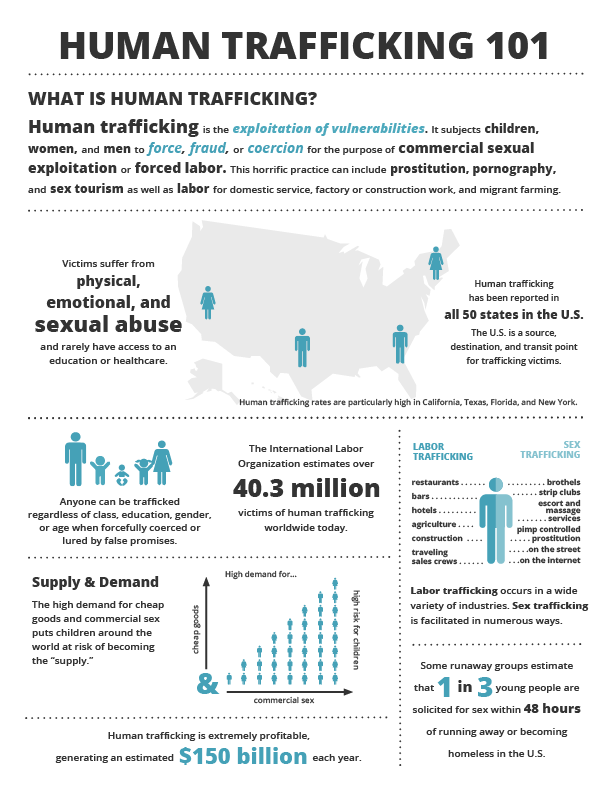
National Slavery and Human Trafficking Prevention Month, observed every January, is dedicated to raising awareness about modern-day slavery and the steps needed to prevent it. Human trafficking affects millions of people worldwide, including men, women, and children, and often goes unnoticed in everyday communities. It can take many forms, such as forced labor, sex trafficking, and domestic servitude. Victims may be exploited through coercion, fraud, or abuse of power, often leaving them afraid to seek help. Education is a critical first step in recognizing and stopping these crimes. By understanding the reality of trafficking, communities can become stronger allies in prevention efforts.
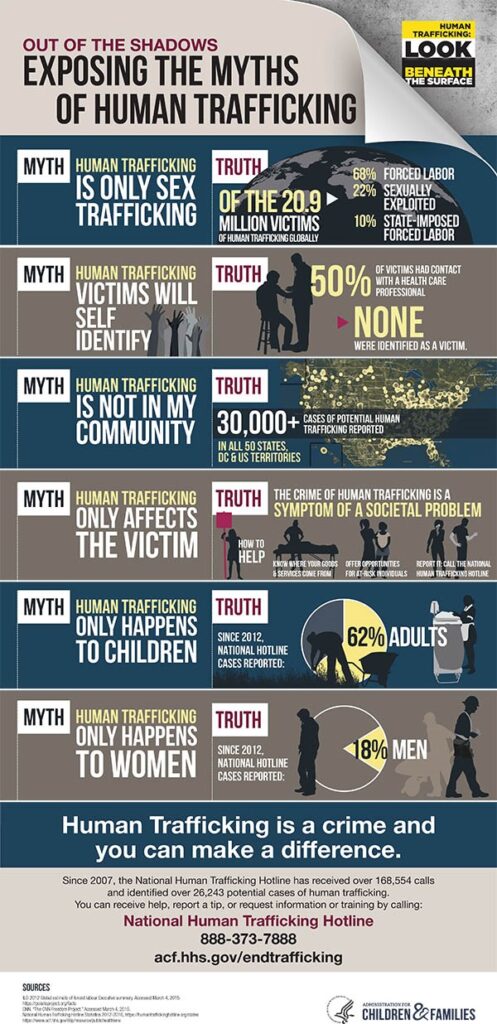
Human trafficking is not only a global issue but also a local one that impacts cities, towns, and rural areas alike. Traffickers frequently target individuals who are vulnerable due to poverty, housing instability, immigration status, or lack of social support. Social media and online platforms have increasingly become tools used to recruit and exploit victims. Many people assume trafficking always involves kidnapping, but in reality, it often involves manipulation and psychological control.
Prevention plays a vital role in ending human trafficking and requires collaboration across communities, organizations, and systems. Schools, healthcare providers, businesses, and faith-based groups can all contribute by learning how to identify and respond to potential trafficking situations. Supporting survivor-centered services is essential to helping victims recover and rebuild their lives. Policies that promote worker protections, safe housing, and access to education also reduce the risk of exploitation. Everyone has a role in creating environments where trafficking cannot thrive. Collective action strengthens prevention efforts and protects vulnerable populations.
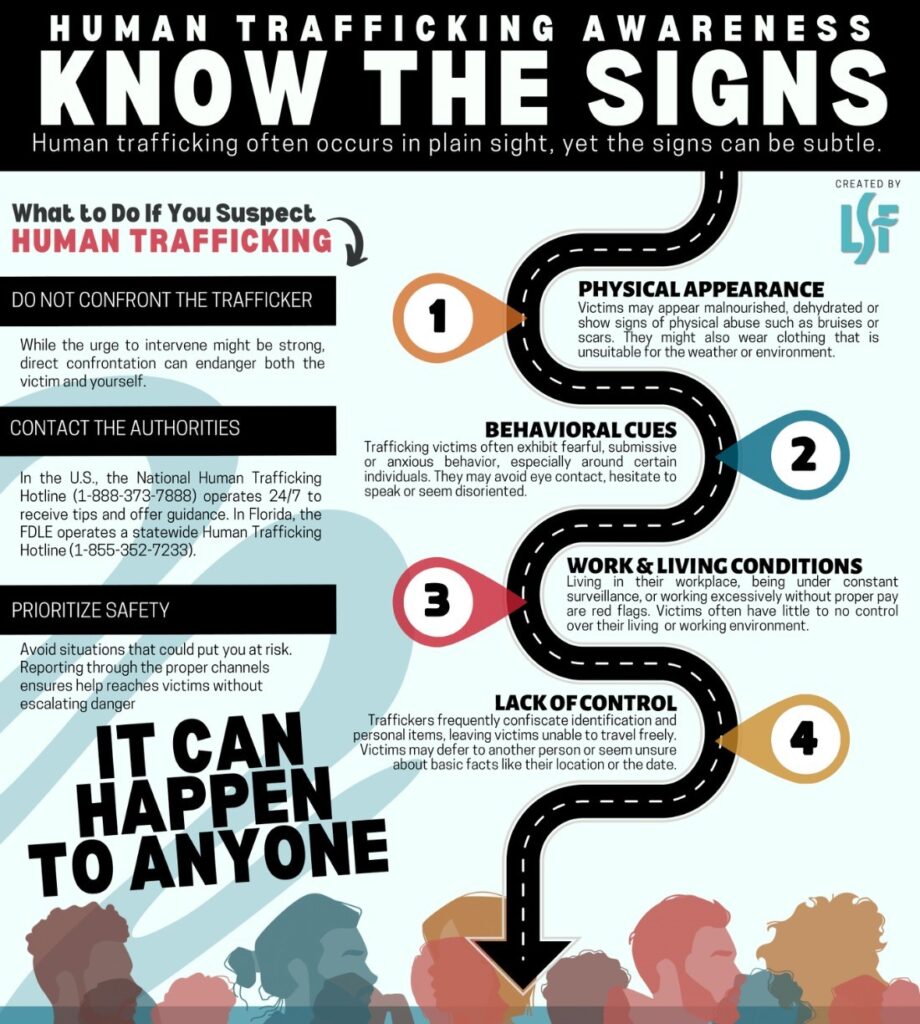
Possible Warning Signs of Human Trafficking
Appears fearful, anxious, submissive, or avoids eye contact
Is controlled by another person who speaks for them or closely monitors them
Lacks access to personal identification, money, phone, or transportation
Gives scripted, inconsistent, or vague answers about work, living situation, or relationships
Shows signs of physical abuse, untreated injuries, exhaustion, or malnutrition
Works excessively long hours with little or no pay
Is unable to leave their job, home, or situation freely
Lives and works in the same place or is frequently moved
Warning Signs in Youth and Online Situations
Sudden unexplained gifts, money, or new clothing
Withdrawal from family, friends, or usual activities
Increased secrecy about online interactions or relationships
Drastic changes in mood, behavior, or school performance
Mentions an older partner, “boyfriend,” “girlfriend,” or “mentor” who is controlling
Excessive late-night internet or social media use
Fear of getting in trouble or reluctance to share details about relationships
Everyone can play a role in prevention by staying informed and aware of their surroundings. Trust your instincts if a situation feels unsafe or unusual, and do not attempt to intervene directly if it could put you or others at risk. If you suspect trafficking, report it to local law enforcement or contact the National Human Trafficking Hotline at 1-888-373-7888 or text 233733. Tips can be submitted anonymously, and trained advocates can guide next steps. Sharing accurate information and resources within your community also helps raise awareness.